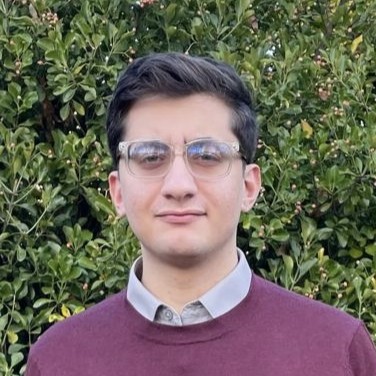
Aidan Katz
- From:
- Queens Village, NY
- Age:
- 25
- College:
- NYU Stern School of Business
- Major:
- Finance and Accounting
- Graduate School:
- NYU Stern School of Business
- Career:
- Financial Analysis (Skilled in Financial Modeling, AI, and available for hire)
The Interview
Aidan, tell us about your Jewish family background.
My mother's side hails from Tashkent, Uzbekistan, with a Persian background, and my father comes from Chust, Ukraine. I will do my best to depict the history as I understood it. Life wasn’t horrible before leaving Russia, but both my mom’s family and my dad’s believed there was more opportunity for prosperity and religious freedom if they left. So my dad left around the age of ten and my mom around the age of seven.
In earlier generations, my ancestors were devout and pious Jews, until 4 or 5 generations ago (depending on which side of the family it was). That all changed when the Soviets took power.
My ancestors struggled in keeping to their Judaism primarily from challenges with assimilation. After emigrating from Ukraine, my father was put into a big yeshiva in Brooklyn from elementary through high school but constantly felt unwelcome or inferior for not speaking the same language or being at the level that administrators expected of him at his age. He became disillusioned with Judaism and, just like many of his cousins and siblings, turned to embrace a more American lifestyle.
My mother, on the other hand grew up around family that was assimilated by the Soviets. I recall a story from my grandfather’s brother that his bar mitzvah was publicized in the paper to attract attention from the government so that they would go after his family for practicing Judaism.
Scary! What type of Jewish home did you grow up in, and what Jewish education did you receive?
Because of the circumstances described earlier, my mom and dad taught us to have pride in our Judaism, without quite understanding what being Jewish really meant. So I grew up riding cars to conservative shul on Shabbos and occasionally attending Hebrew school, lighting Chanukah candles, and fasting on Yom Kippur but never really connecting or understanding what any of those practices really meant. We bought only kosher meat and didn’t mix meat and dairy, but kept a pantry with some goods that didn’t have a hechsher. The values we kept to were all mixed up, some American, many Russian, all of which had a Jewish flavor, but never quite clear on virtues of the Torah.
Where do you stand in your Jewish observance today?
I am currently in Yeshiva in The Shaar, a ba'al teshuva program at Shor Yoshuv in Far Rockaway. While I look for full-time work (again, if anyone might know someone, please find me through LinkedIn or through TPF leadership!), I take classes in Mussar, Gemara, Pirkei Avot, and Chumash daily, and have been working hard to keep Shabbos, Daven, and do mitzvot like wrapping tefillin and not speaking lashon hara.
Wow! Most TPF students are not in full-time yeshiva. Tell us what gap TPF fills for you that supplements your yeshiva education
With TPF, I can explore topics that I don't have the flexibility for in a structured learning environment. (Ed. note: According to Aidan's mentor Rabbi Dan Klatzko, their weekly TPF sessions enable them to go through a structured system of Torah understanding, including Rabbi Jonathan Rietti's Taryag Mitzvos learning system, which helps organize what Aidan learns in yeshiva as well as add new and deeper understanding)
How did you first hear about The Podcast Fellowship?
I found out about the Podcast Fellowship through a chavrusa I met in February of this year.
Would you have been interested in TPF without the $15 stipend offer?
I think since there’s so many other things drawing on my attention these days, the $15 stipend was a strong point of attraction.
Tell us about your interactions with your mentor, and your thoughts on TPF's learning model.
I already knew my mentor (Rabbi Dan Klatzko) before we started doing the podcast together, and he is an amazing human being: warm, friendly, very intelligent, and incredibly inspiring. I believe we have a strong relationship that surpasses the bounds of the actual podcast program. I prepare for my discussions with him by summarizing the key points made by the speaker and imagining how I might implement the lessons the speaker teaches in my own life. The most recent podcast I listened to was by Charlie Harary, who spoke about pushing just a small amount past the boundary of discomfort we experience in challenging circumstances, allowing us to make a habit of becoming more capable and proactive people. After we discuss, the discussion always balloons into more broader topics in Torah and Jewish living in general.
Who are your favorite podcast speakers?
Charlie Harary and Rabbi Manis Friedman have been far and away my favorites
What has been your experience after October 7, 2023? Have you seen antisemitism? If yes, how do you deal with it?
My life has gotten exponentially better since October 7th, as I’ve made the effort to get closer to Hashem. I’ve seen antisemitism as a given my whole life, and not for a moment did I believe, nor did my parents instill in me, that it would get any better. (The difference is that) now when I see antisemitism flaring up, rather than become fearful or depressed, I’ve become emboldened in my belief that I am doing the right thing and more motivated to practice my Judaism and continue my Torah study.
Can you summarize your experience with The Podcast Fellowship in a single quote?
TPF is a stepping-stone to a life guided by ultimate Truth.