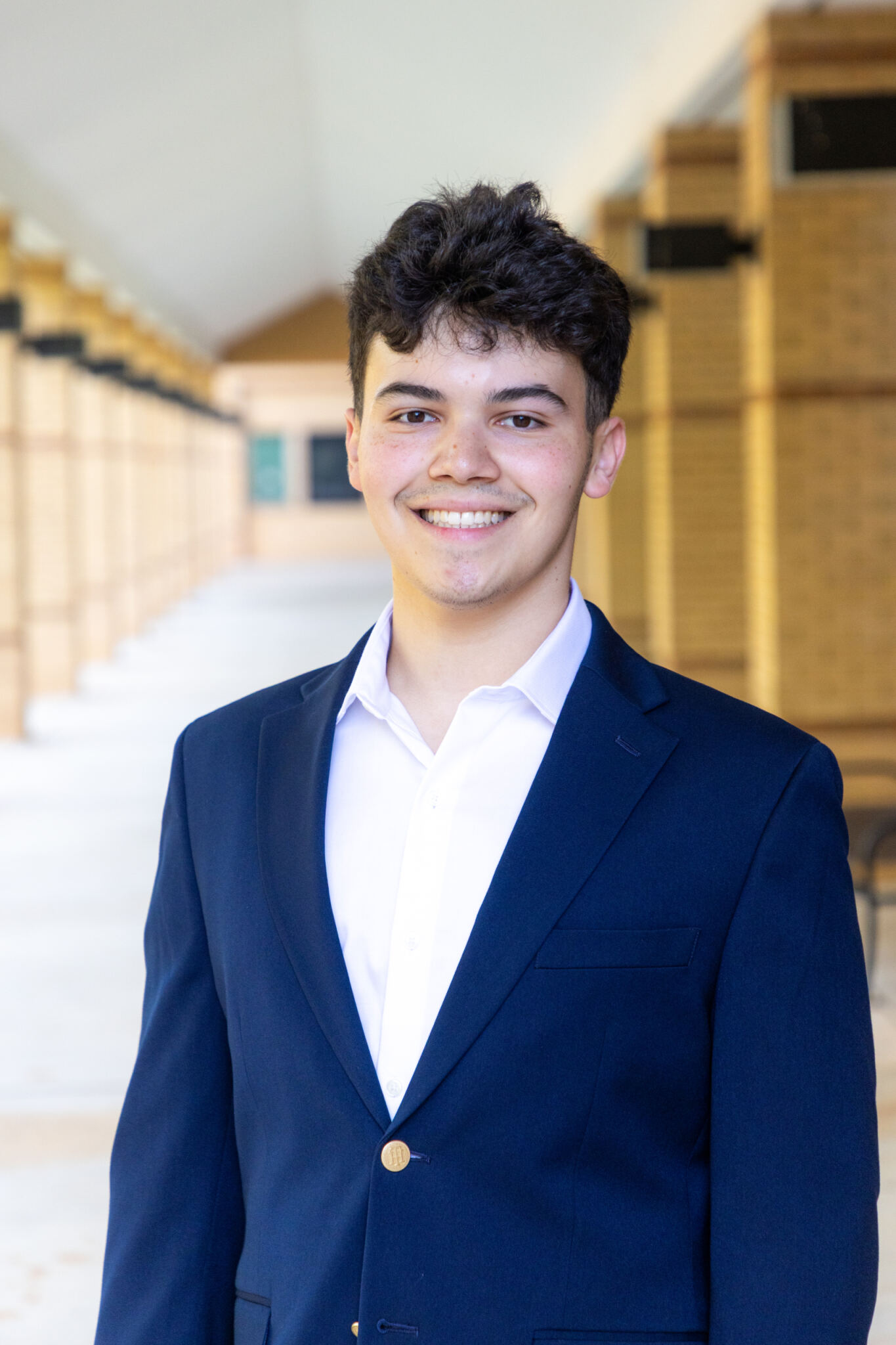
Reid Kaplan
- From:
- Dunwoody, GA
- Age:
- 20
- College:
- University of Georgia, Athens
- Major:
- Psychology and Human Services
- Career:
- Clinical Psychologist or Counselor
The Interview
Reid, how did you find out about The Podcast Fellowship?
I was told about the Podcast Fellowship by my mentor Rabbi Netanel Friedman (of Atlanta Scholars' Kollel and Shevatim who I met at Torah studies in his congregation in Dunwoody. I really enjoy talking with and learning from Rabbi Friedman because of his relaxed intelligence and willingness to address our confusions and interests in specific topics and expand on them in such great detail.
Would you have been interested in The Podcast Fellowship without the $15 stipend?
Yes, although I originally was not convinced to join the Podcast Fellowship out of (an irrational) fear of the time commitment (It does not take up that much time). My friend Reece Bashuk finally succeeded in encouraging me to join by reminding me of how flexible and understanding Rabbi Friedman is. The $15 is an excellent perk and certainly motivates me, but I would still enjoy Jewish learning without it.
Tell us about your experience with TPF. What are your interactions with your mentor like? How do you prepare and discuss podcasts with him?
I listen to a podcast about every other week. Sometimes I pick what I want to listen to. Other times, Rabbi Friedman or one of my peers chooses a podcast for us to listen to. The topics vary widely, yet are all very insightful. Around significant holidays, we will listen to and discuss a Podcast related to that holiday. For example, I recently learned about Lag Ba’Omer and the surrounding significance of Rabbi Shimon Bar Yochai. I always take notes on a Google document while listening to a podcast and prepare a couple questions in advance regarding it. Typically, my interactions with my mentor will be over the phone, on Zoom, in person at our campus Hillel, or at his congregation in Dunwoody. Regardless of communication medium, Rabbi Friedman welcomes any question I have about the podcasts and gives me drawn-out yet insightful and rich answers. I appreciate the joy he shows when we share our own insights with him.
Who is your favorite speaker/what is your favorite podcast topic?
I don’t listen to enough podcasts to have a favorite speaker, however, I admire Rabbi Lord Jonathan Sacks, whose ideas helped me conceptualize anti-Semitism. Additionally, I am quite fascinated with Rabbi Dov Ber Cohen. I’ve not listened to any of his podcasts, but I met him at the beginning of my current summer vacation in Israel during my visit to Aish HaTorah, where I joined a few class sessions. His story as Ba'al Teshuva showed me the power of Judaism and that ideological change can come from the most unexpected places, in the most unexpected ways.
Maybe my favorite podcast is the one on teshuva/redemption that addressed if the evil Darth Vader from Star Wars actually redeemed himself or not. Aside from that, Kabbala and Tanya (Jewish mysticism in general) are among my favorite Judaic topics to study. I am a big fan of psychology and philosophy.
What has been your experience after October 7, 2023? Have you seen antisemitism? If yes, how do you deal with it?
I’ve seen a very light amount of firsthand anti-Semitism in the US. My friend faced a minor display of it once. Also, a man dressed as a Nazi SS soldier paraded through downtown Athens near my university campus. That was an extremely appalling demonstration. Since my stay in Israel this summer, I’ve noticed some Jewish hate by Arab locals. I’ve noticed an inherent dislike toward Jewish people, although some Muslims show it more than others. Once, a Muslim employee at a coffee shop served me scorching hot coffee not even filled close to the top of the cup and grew impatient with me for virtually no reason. He could clearly tell I was an Anglo and saw I was wearing a kippah. I’m not confirming this as an act of Jewish hate, although it seemed very plausible. I did not how to deal with this, but I did feel a knot in my throat and a sense of confusion. I usually deal with anti-Semitism by talking about it with my Jewish peers. We did this a lot during Birthright and I often talk about global Jewish hate among my peers in the Podcast Fellowship.
Tell us about your Jewish family background: from where is your ancestry? Do you know any interesting stories of your ancestors?
I believe that both sides of my family are from Poland, although I do not know much about their history. I do know that the majority of them escaped Europe before the Holocaust and that my great-great-grandfather Max Mindel had encountered Nazis and occasionally found himself resorting to lethal matters to defend himself and save his and others’ lives.
What type of Jewish home did you grow up in and what Jewish education did you receive?
I grew up in a reform Jewish home. In my lifetime, I always felt myself more interested in Judaism than my parents ever were. Nevertheless, we celebrated most of the High Holidays with extended family, as well as Hanukkah and Pesach. If I did not celebrate at home, I celebrated the principal holidays at the Davis Academy—the Jewish day school I attended from kindergarten through 5th grade. At Davis, I learned to read Hebrew, the central prayers, and basic Judaics. I left Davis but soon after joined Temple Emanu'el, where I had my Bar Mitzvah and started getting more enjoyment out of services and prayers. For me, my engagement with BBYO in high school was more of a leadership development opportunity than a religious opportunity, however, BBYO helped me understand what being in a Jewish community looks like and means for my identity.
Has your connection to Judaism matured since then?
Yes. Since my engagement with Chabad, Podcast Fellowship, and Hillel in college, as well as my trips to Poland and Israel, I have been more in tune to my Jewish identity than ever. What I especially love about Judaism is the community, the rich biblical history and theology, the nuances distinguishing sects, Kabbala and Tanya, and so much more. I feel more connected to a Divine Force and more ready to absorb more Jewish knowledge and insight because I have learned so much.
Where do you stand in your Jewish observance today?
It’s hard to concisely label my Jewish observance, but I still consider myself Reform because that is how I grew up and most of my beliefs align with Reform Judaism. I share an equal degree of tolerance to other communities and other Jewish sects with Reform Jews. I feel that Judaism can and should be expressed in multiple ways, of course, up to the discretion of the individual. I’d call myself an open-minded yet skeptical Jew who consumes Jewish information at any chance he gets. I value my campus's Chabad because the Rabbi there has a very intellectual approach to Judaism. Judaism, to me, is not just a source of comfort from religious and community identification, but also a reinforcement of my values and a test of my critical thinking ability.
Can you summarize your experience with The Podcast Fellowship in a single quote?
My experience in the Podcast Fellowship has been enjoyably discretionary. I feel that my Jewish self-expression is completely up to me, as I am able to engage with my Jewish identity by delving into any topic I want. I am grateful that I have the ability to freely explore the title that best defines me: Jew.